


In the pipe industry, with its trend towards multi-specification, small-batch production, traditional pipe-making machines suffer from high costs associated with large mold investments, long downtime for mold changes, and high reliance on manual labor, continuously driving up factory operating costs.
An increasing number of steel pipe manufacturers are upgrading to intelligent shared-mold pipe-making machines, precisely reducing costs across four dimensions: molds, capacity, labor, and waste, achieving refined production profitability.
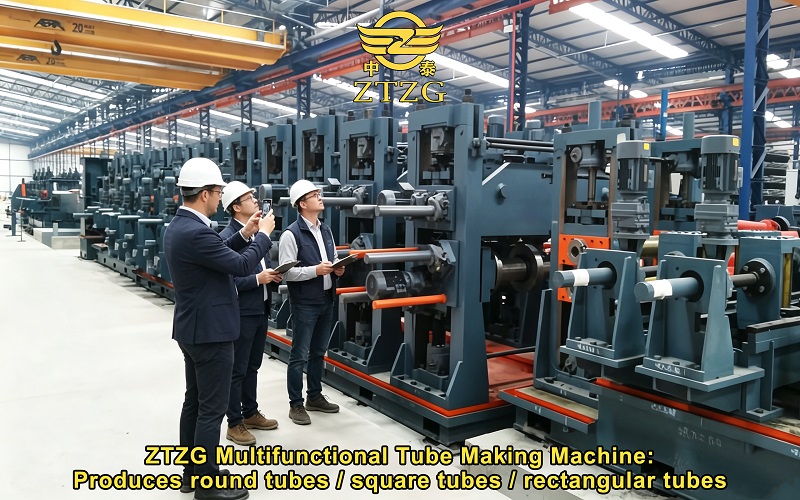
1. Significantly Reduced Mold Procurement and Storage Costs.
Traditional pipe-making machines require dozens of sets of dedicated rolling mill molds, resulting in significant capital investment and high costs for mold grinding, maintenance, and storage.
Intelligent shared-mold pipe-making machines, relying on servo intelligent adjustment technology, allow a single rolling mill to cover the production of multiple specifications of round and rectangular pipes within a given range, reducing mold investment by 80%–95%, completely eliminating large-scale mold stockpiling, and greatly alleviating factory financial pressure.
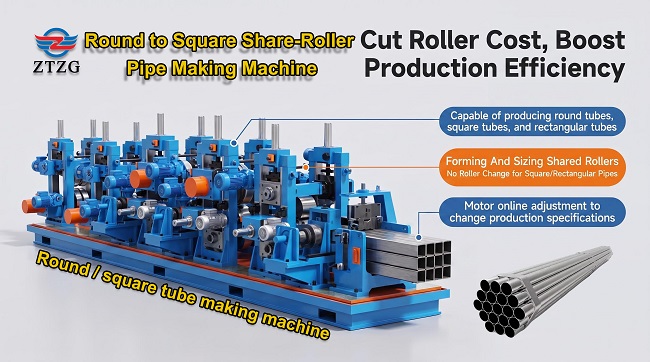
2. Reduced Downtime Losses and Increased Effective Capacity.
Traditional welded pipe production lines require 2–4 hours of disassembly and debugging for changing specifications, leading to frequent order changes and significant capacity waste.
The intelligent pipe-making machine supports one-click parameter switching, completing specification adjustments in minutes without the need to disassemble or assemble rollers. This significantly reduces downtime and effectively improves the utilization rate of welded pipe production machines and order delivery efficiency, adapting to multi-batch, fragmented order production.
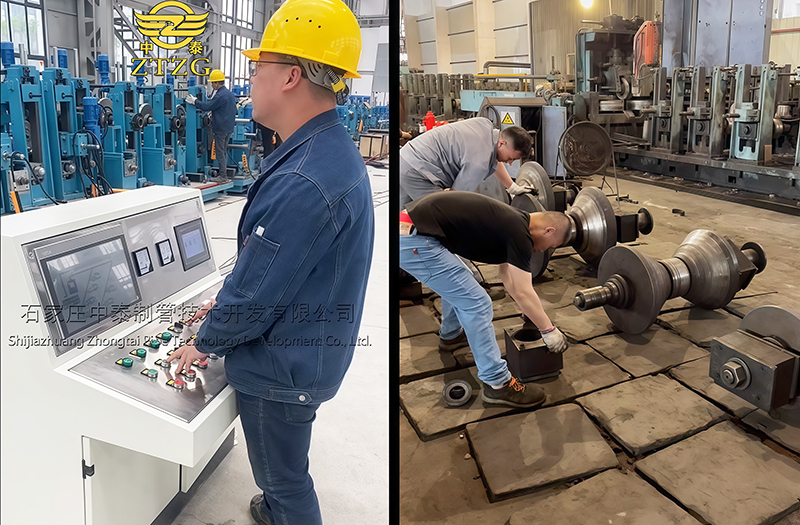
3. Energy saving and reduced maintenance costs.
The new generation of intelligent high-frequency pipe-making machines is equipped with an energy-saving welding system, resulting in lower production energy consumption.
The welded pipe production line eliminates the need for frequent roller disassembly and assembly, reducing wear on the frame and shaft ends, significantly lowering the failure rate, extending equipment lifespan, and substantially reducing long-term maintenance costs. This helps pipe factories achieve long-term cost reduction, quality improvement, and efficiency enhancement.
Post time: Sep-29-2024


